




COP-26: Panel presents solutions for low-carbon agriculture


The 26th UN Climate Change Conference (COP-26) takes place between November 1 and 12 in Glasgow and aims to secure and strengthen the commitment of countries in regard to their targets to reduce carbon emissions.
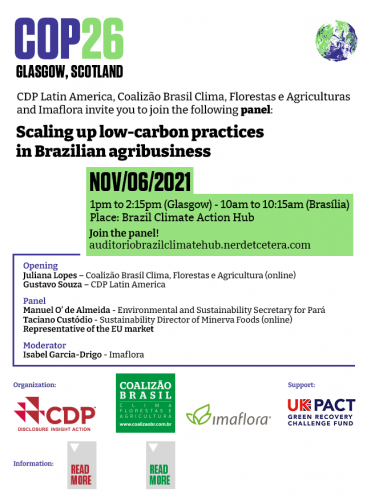
The program will include an important debate organised by Imaflora in partnership with CDP Latin America and Coalizão Brasil Clima, Florestas e Agricultura. The main objective of the panel, titled "Scaling up low-carbon practices in Brazilian agribusiness," is to debate the role of tools for the implementation of sustainable practices in Brazilian agriculture and cattle-ranching.
The event is also going to include the first results of Imaflora's Carbon on Track Program, carried out for Minerva Foods as part of its Renove project. The project calculated emissions and carbon sequestration levels in 25 farms in five Latin American countries, showing the effects of good farming practices. In addition, the panel will discuss the contribution of tracking mechanisms in the fight against deforestation and the perceptions and expectations of large international buyers.
Date: November 6 from 1pm to 2:15pm (Glasgow) – 9am to 10:15pm (Brasília)
Place: Brazil Climate Action Hub
Link to join the event: auditoriobrasilclimatehub.nerdetcetera.com
Information: https://www.cdp.net/en/cop26;
http://www.coalizaobr.com.br/home/index.php/cop26/920-agenda-da-coalizao-na-cop-26
INFO BRIEF Nº. 3 - BEEF CATTLE PRODUCTIVITY INDEX: AN APPLICATION IN THE BEEF TAC
The research is an analysis for the establishment of a beef cattle productivity index, based on a maximum productivity index of a beef cattle ranch, as a way to monitor and suppress the laundering of cattle.
JBS and Public Prosecutor’s Office in the press: understand the case and the way forward
Involvement in the Beef on Track Program does not exempt companies from being sued by the Public Prosecutor’s Office
O Globo: With cattle burps as the main source of methane, cattle-ranching is key for Brazil to reduce emissions
Article discusses the obstacles and changes needed for the country to achieve the global target of reducing greenhouse gas emissions.